
— questions & care
everything you need to know about
living with cyanotype
Your piece is made to be worn, washed, and loved.
Here's how to take care of it — and answers to the questions I get asked most!
washing & care
-
Your garment is sealed with Jacquard SolarFast — a permanent dye that's significantly more stable than traditional cyanotype. That said, it still needs a little love.
Soaps: Dr. Bronner's castile soap, Ecomax Natural orange laundry wash, or any gentle phosphate-free liquid.
Chemicals like Oxyclean will strip the dye, so stay away from those.
I haven’t had problems with bleeding after the initial wash, but I would still be cautious with washing your piece with light colors.
-
These will alter the color or damage the print. Keep them far away from your piece:
Avoid: Bleach, Oxiclean, borax, washing soda, baking soda
Avoid: Powdered detergents and any form of washing salts
Avoid: Drying in direct sunlight (continued UV exposure will fade the print)
Avoid: Phosphate-containing soaps
Sweat and hand oils can also cause discoloration over time — handle prints with care when wearing, especially in hot weather.
-
overwashing and prolonged sun exposure are the most common culprits.
a dilute bath of hydrogen peroxide can usually restore the print close to its original intensity. mix a small amount with cool water, submerge the garment briefly, then rinse thoroughly and air dry in the shade.
also, this is living! the print will change throughout time and that’s the point. :) embrace the shades of blue as you wear it throughout the seasons
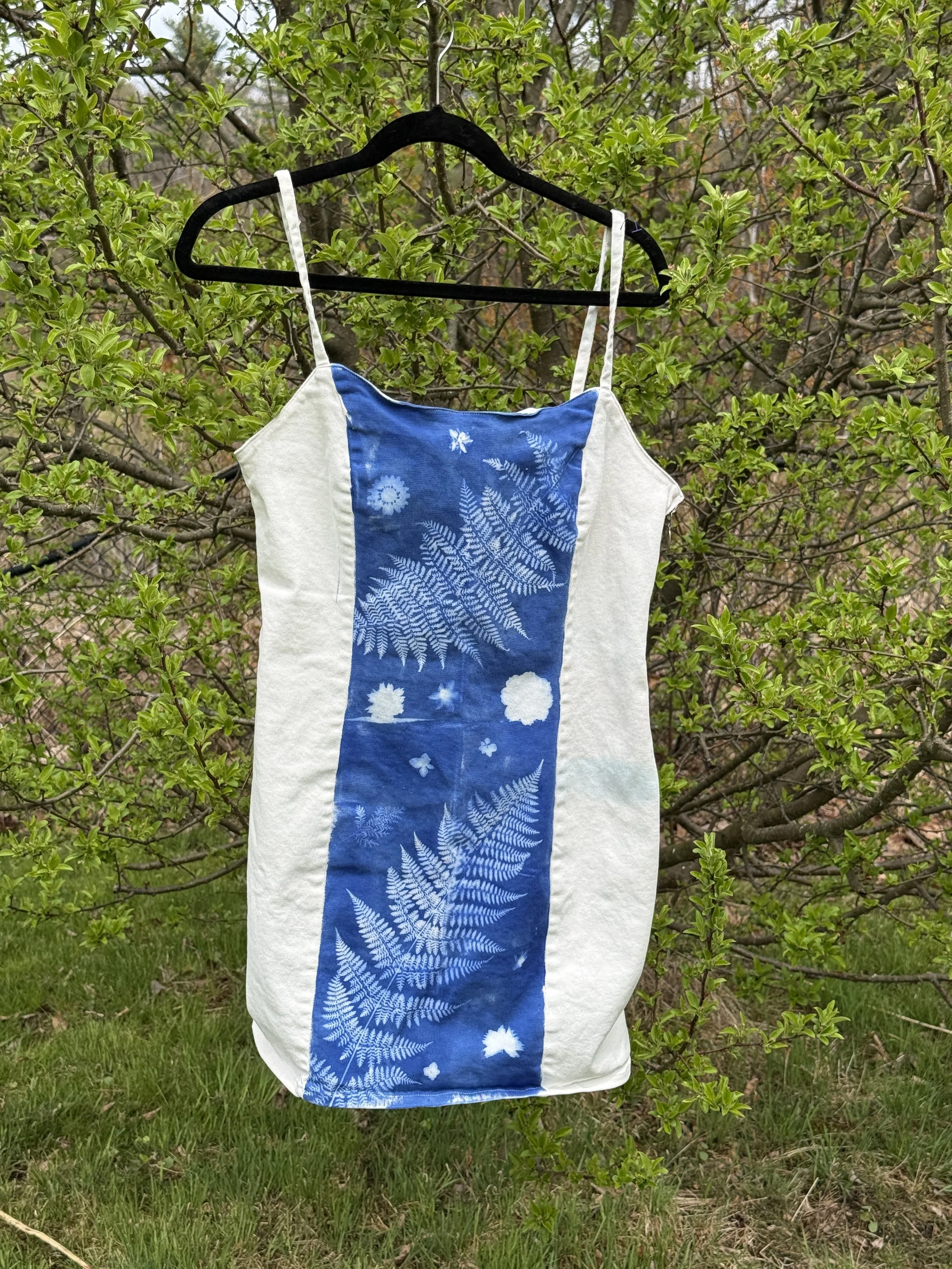
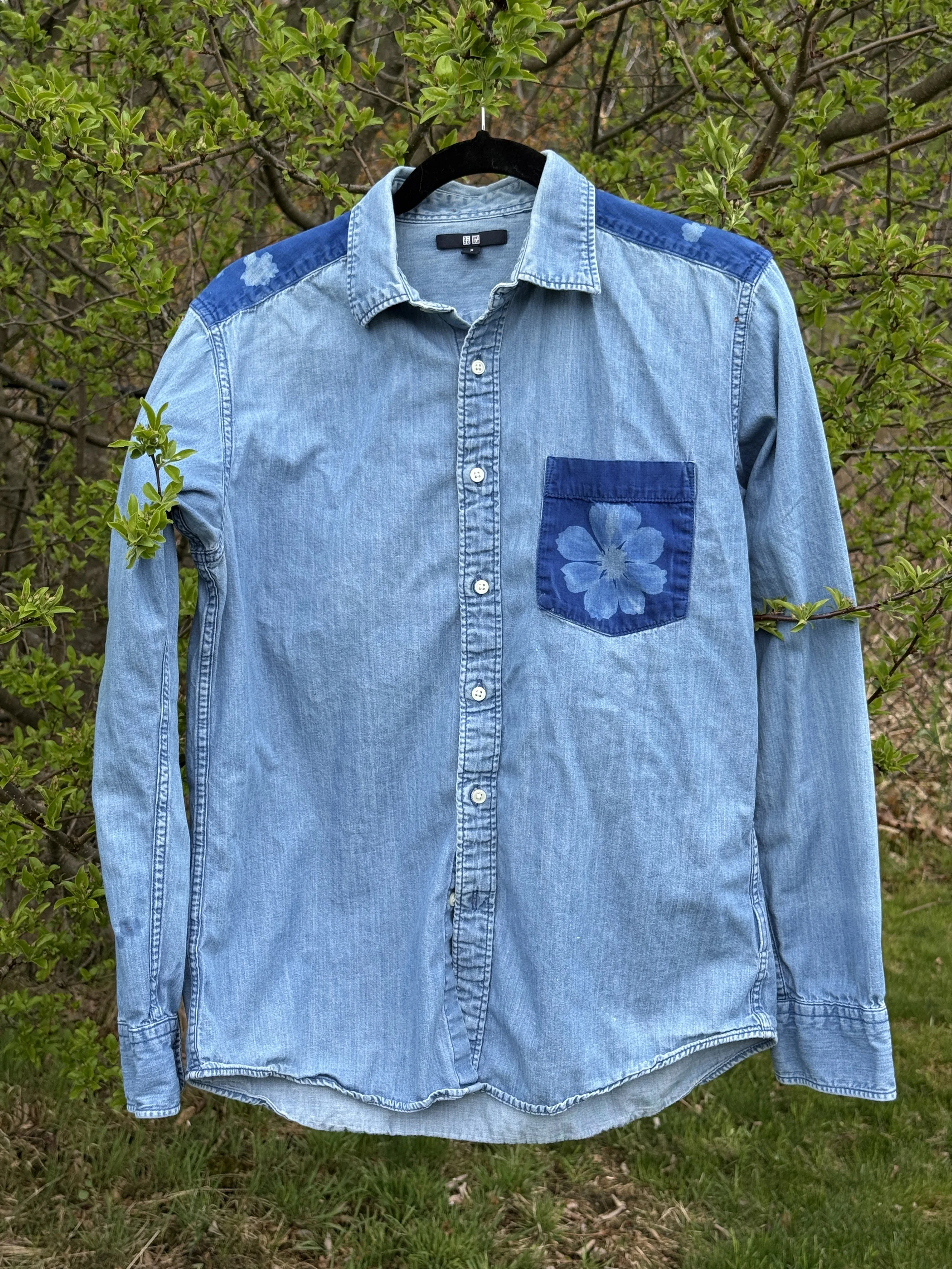
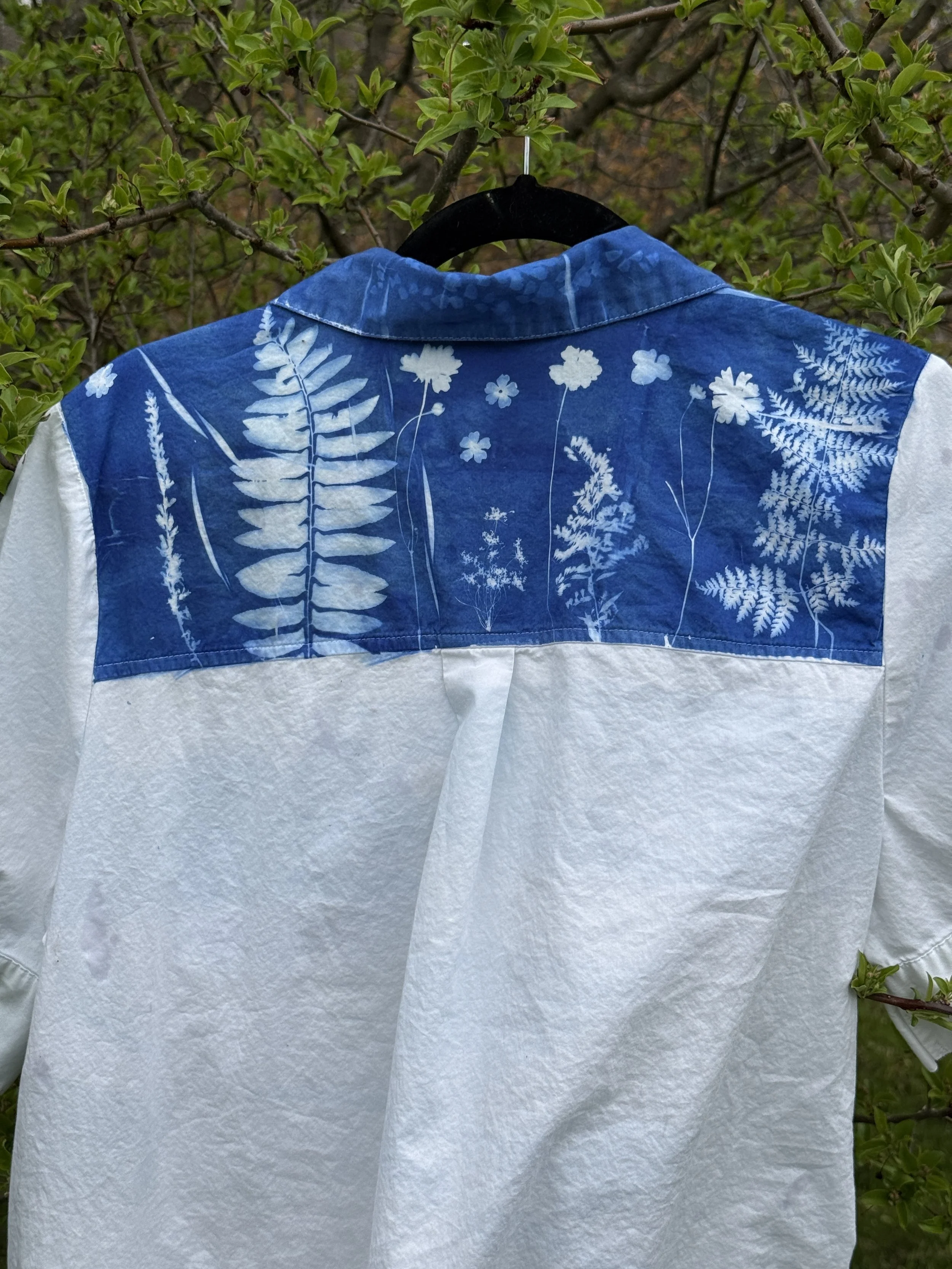
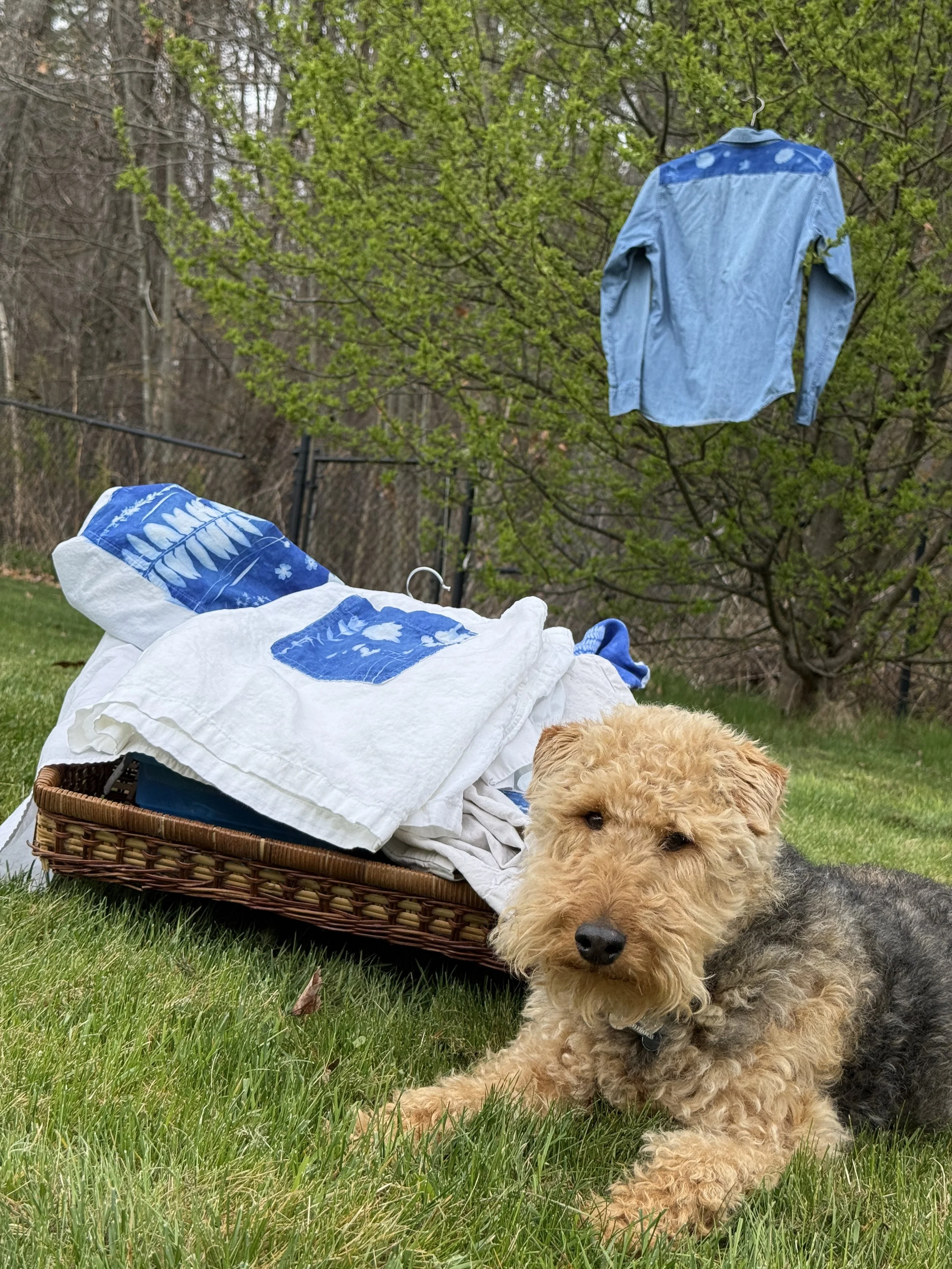
shopping & orders
-
Right now, pieces are available in person at Spotlight Vintage in St. Albans, Vermont. Online drops will be announced via the email list and social media — sign up to be the first to know. Drops are limited and tend to sell out quickly.
-
Custom orders and private workshops are something I love doing! If you have a garment you already own and want printed — or if you want to arrange a custom session — reach out via social media or email.
Spots are limited and availability varies.
-
Because every piece is truly one of a kind and secondhand, returns are evaluated case by case. Please reach out if there's an issue — I want you to love what you have.Custom orders are non-refundable.
-
Yes — workshops are coming. I'll announce them via email and Instagram when they're scheduled.
In the meantime, if you want to arrange a private or group workshop (in Vermont or elsewhere), get in touch and we'll figure something out!
the process
-
Cyanotype is one of the earliest forms of photography — and the most direct. A light-sensitive iron solution is painted onto fabric or paper. Objects are placed on top: botanicals, lace, pressed flowers, photographic negatives. When exposed to UV light, the chemistry reacts and turns deep Prussian blue everywhere where its exposed to light. Where something blocked the light, the surface stays white. The result is a contact print — a true impression of whatever was there.
There's no lens, no screen, no filter between the subject and the cloth. A fern from the garden touches the fabric and leaves its shape. That directness is what makes every piece genuinely one of a kind — the sun, the plant, the day all show up in the print.
-
Traditional cyanotype on fabric can be delicate — it requires special washing and can be sensitive to alkaline environments. I use Jacquard SolarFast for most of my garments, which permanently seals the dye into the fibers. This means your garment is genuinely wearable and washable for years with basic care, rather than treated like a precious artifact.
The printing process itself is traditional — sunlight (or UV lamps in winter), chemistry mixed by hand, botanicals pressed and arranged by hand.
-
From my garden, from walks through the Vermont countryside, from travels around the world. I press and store everything carefully in my studio and reuse botanicals for over two years before they finally fall apart.
The prints are also made from travel photographs and portraits — moments from daily life that I've converted into negatives for printing. So a piece might contain a fern from the backyard or a shadow from somewhere much further away!
-
Cyanotype works best on natural fibers: cotton, denim, canvas, and linen take the solution most beautifully.
Nearly all garments are sourced secondhand — thrifted, vintage, and local shops. I look for quality pieces that have good fabric content and are looking for another life.